
Piano Scales
Piano scales in all 12 keys — major, natural minor, major and minor pentatonic and blues — on an interactive keyboard with standard right- and left-hand fingering. Pick a scale to hear it played, or browse the piano scales chart for every key.
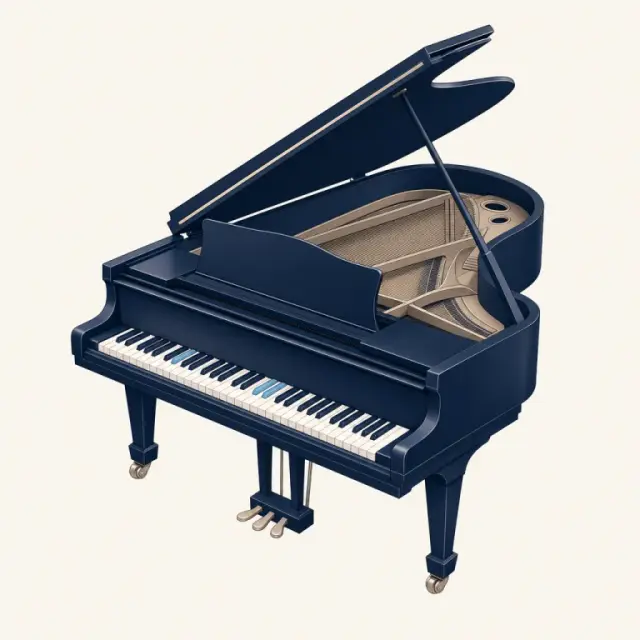
Piano scales explorer
C Major Scale
Formula · W–W–H–W–W–W–H
- Root
- Scale note
Piano scales chart
60 piano scales — five types in all 12 keys. Each card opens a page with a two-octave keyboard, fingering for both hands, the chords of the key and audio.
Major scales
About the major scaleNatural minor scales
About the minor scaleMajor pentatonic scales
About the major pentatonic scale- Cmajor pentatonicC D E G A
- D♭major pentatonicD♭ E♭ F A♭ B♭
- Dmajor pentatonicD E F♯ A B
- E♭major pentatonicE♭ F G B♭ C
- Emajor pentatonicE F♯ G♯ B C♯
- Fmajor pentatonicF G A C D
- F♯major pentatonicF♯ G♯ A♯ C♯ D♯
- Gmajor pentatonicG A B D E
- A♭major pentatonicA♭ B♭ C E♭ F
- Amajor pentatonicA B C♯ E F♯
- B♭major pentatonicB♭ C D F G
- Bmajor pentatonicB C♯ D♯ F♯ G♯
Minor pentatonic scales
About the minor pentatonic scale- Cminor pentatonicC E♭ F G B♭
- C♯minor pentatonicC♯ E F♯ G♯ B
- Dminor pentatonicD F G A C
- D♯minor pentatonicD♯ F♯ G♯ A♯ C♯
- Eminor pentatonicE G A B D
- Fminor pentatonicF A♭ B♭ C E♭
- F♯minor pentatonicF♯ A B C♯ E
- Gminor pentatonicG B♭ C D F
- G♯minor pentatonicG♯ B C♯ D♯ F♯
- Aminor pentatonicA C D E G
- B♭minor pentatonicB♭ D♭ E♭ F A♭
- Bminor pentatonicB D E F♯ A
Piano scales for beginners
Begin your piano scales with C major (white keys only), then G, D, A and E major — each adds one sharp and keeps the right-hand fingering 1-2-3-1-2-3-4-5. Add their relative minors as you go.
A four-week plan for piano scales
Fifteen minutes a day at the piano is enough to learn your first six piano scales properly.
- 1
Week 1: C major, hands separately
Play one octave with each hand at 60 bpm: 1-2-3-1-2-3-4-5 in the right hand, 5-4-3-2-1-3-2-1 in the left. Keep the wrist level as the thumb passes under.
- 2
Week 2: G and D major
Add G (one sharp) and D (two sharps) with the same fingering, then stretch all three piano scales to two octaves. Only the black keys change.
- 3
Week 3: the relative minors
Learn A, E and B minor straight after their relative majors. Same notes, a new starting point — and the same fingering as the major scale on each root.
- 4
Week 4: hands together and the black keys
Put C major hands together slowly, then improvise on the black-key pentatonic over a left-hand G♭ chord. Six piano scales in a month is a solid start.
How piano scale fingering works
Standard piano fingerings follow two rules: the thumb avoids black keys, and the hand moves on by passing the thumb under the 3rd or 4th finger (or crossing the 3rd or 4th finger over the thumb on the way down). That is why the right hand plays C major as 1-2-3, 1-2-3-4-5 and F major as 1-2-3-4, 1-2-3-4.
Pentatonic and blues piano scales have no fixed fingering. Each of their pages suggests a comfortable grouping for that key and points out which notes fall on black keys.
A piano scale a day
Pick one of the piano scales each day and go around the circle of fifths: C, G, D, A, E, B, F♯, then D♭, A♭, E♭, B♭ and F. Play it hands separately, then hands together, one octave and then two, slowly enough that every thumb crossing is silent and even.
Finish by playing the chords of that key — every scale page has them, with a I–IV–V–I you can hear — so your piano scales turn into harmony you can use.
Seeing piano scales on the keyboard

Each of the piano scales has its own pattern of black and white keys. C major uses no black keys, G major one, D major two — and D♭ major uses all five. Learning the shape of each pattern by sight is faster than memorising note lists.
The keyboards here show two octaves with the root in violet, finger numbers above each note and a play button that lights the keys as they sound. Tap any key to hear it on the piano.
Piano scales in exams and lessons

Most graded piano exams — ABRSM, Trinity, RCM and others — ask for piano scales from the early grades, beginning with keys such as C, G, D and F major and A and D minor. Later grades add more keys, hands together, contrary motion, chromatic scales and arpeggios, each at a set minimum tempo.
Even if you never sit an exam, the habit pays off: piano teachers use scales to build even fingers, a relaxed thumb and a feel for each key, which makes new pieces faster to learn and easier to sight-read.
Common mistakes with piano scales

Thumb bumps
An accent where the thumb passes under is the most common flaw in piano scales. Practise just the crossing, slowly, with a level wrist, until you can’t hear where it happens.
Guessing black-key fingerings
B♭, E♭ and A♭ major don’t start on the thumb. Check the fingering on each page before a wrong habit sets in — it is much harder to unlearn.
Tense shoulders and wrists
Speed comes from relaxed hands. If your shoulders lift or your wrist locks, slow down, drop your arms and start again.
Only practising hands together
Hands together hides weak spots in each hand. Keep a few minutes of hands-separate work in every session, especially for the left hand.
Scale types explained
The five types behind these piano scales — what each one is, how it sounds and where it is used.
Piano scales in practice



Piano Scales FAQ

How many piano scales are there?
Which piano scales should I learn first?
What is the standard fingering for piano scales?
Why does the thumb go under in piano scales?
Should I practise piano scales hands together?
How fast should I play piano scales?
How long should I practise piano scales each day?
Do I need piano scales if I play by ear?
Which piano scales are the hardest?
What is contrary motion?
From scales to chords
Every chord in every key, on a keyboard you can play — the natural next step after piano scales.