
Pentatonic Scale
A pentatonic scale is any five-note scale, and the two you’ll use most are the major form (1 2 3 5 6) and the minor form (1 ♭3 4 5 ♭7). With no half steps, the pentatonic scale is almost impossible to play “wrong” — which is why it turns up in folk music worldwide and in nearly every rock, blues and country solo. Explore both forms in any key below.

Formula
1 2 3 5 6
W–W–1½–W–1½
Explore the pentatonic scale
G Major Pentatonic Scale
Formula · W–W–1½–W–1½
- Root
- Scale note
The major pentatonic scale in all 12 keys
Each card opens the piano or guitar page for that key. For the minor form, see the minor pentatonic page.
- C= A minor pent.
C D E G A
- D♭= B♭ minor pent.
D♭ E♭ F A♭ B♭
- D= B minor pent.
D E F♯ A B
- E♭= C minor pent.
E♭ F G B♭ C
- E= C♯ minor pent.
E F♯ G♯ B C♯
- F= D minor pent.
F G A C D
- F♯= D♯ minor pent.
F♯ G♯ A♯ C♯ D♯
- G= E minor pent.
G A B D E
- A♭= F minor pent.
A♭ B♭ C E♭ F
- A= F♯ minor pent.
A B C♯ E F♯
- B♭= G minor pent.
B♭ C D F G
- B= G♯ minor pent.
B C♯ D♯ F♯ G♯
What is a pentatonic scale?
Penta means five: a pentatonic scale has five notes per octave instead of seven. The major form is the major scale without its 4th and 7th; the minor form is natural minor without its 2nd and ♭6th. Taking those notes out removes every half step, so any two of the remaining notes sound good together.
The same five notes can sound major or minor depending on which one feels like home: C D E G A and A C D E G are the same set. On the piano, the five black keys form a pentatonic scale on their own — G♭ major or E♭ minor.
Pentatonic scale guitar shapes

On guitar the pentatonic scale is played in five box shapes that link across the neck, with two notes on every string. The same five boxes serve both the major and the minor form — only the root changes — so learning them once covers every key.
Start with the box whose root sits under your first finger on the 6th string (box 1 of the minor form), add the box above it, and connect the two with slides. Every guitar scale page shows all five boxes with play buttons.
The pentatonic scale on piano
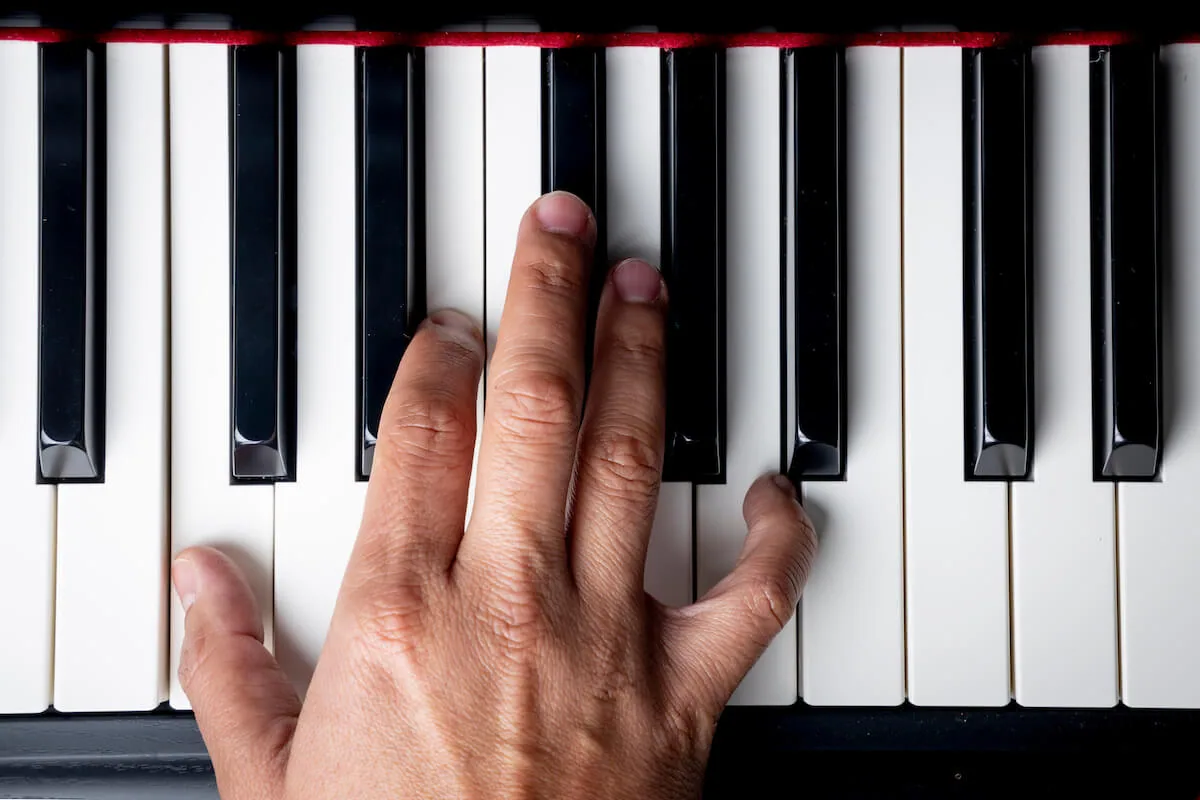
On the piano the pentatonic scale is the easiest way into improvising: hold the key’s chord in the left hand and let the right hand wander through the five notes — nothing will clash. Try the black keys alone for an instant demonstration; Chopin’s “Black Key” Étude, Op. 10 No. 5, keeps the right hand on them almost throughout.
There is no single standard fingering; most players group the right hand as 1-2-3 then 1-2, crossing the thumb under once per octave and keeping it on white keys where possible.
On bass, ukulele and mandolin
Bass players use the pentatonic scale constantly for grooves and fills, because its notes outline the chord without the clashing 4th or 7th. A four-string bass is tuned like the four lowest guitar strings (E A D G, an octave lower), so the guitar boxes on the bottom four strings work unchanged. A classic move: root, 5th, octave, then back down through the ♭7 or the 6.
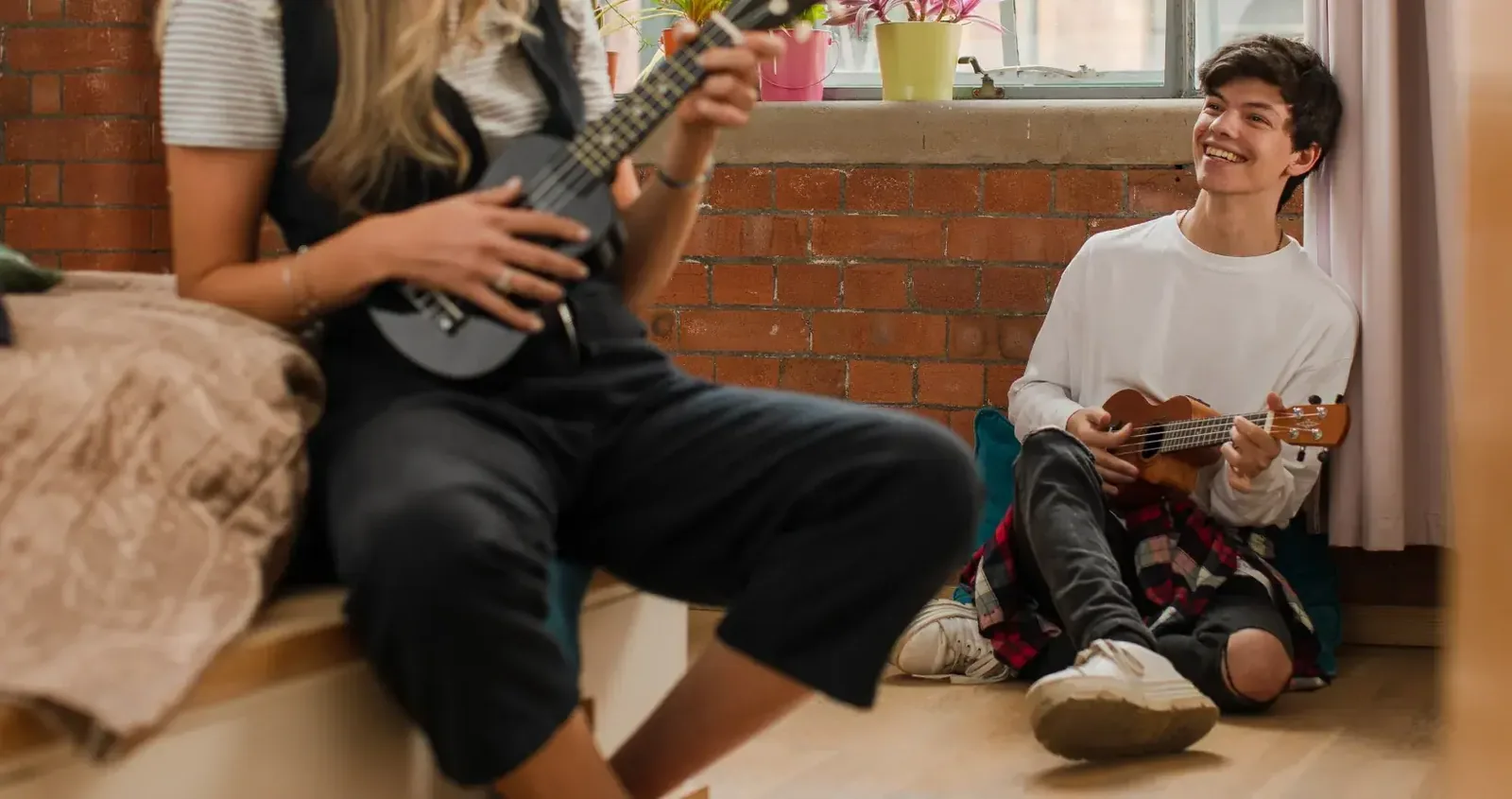
A standard ukulele’s open strings, G C E A, all belong to C major (and A minor) pentatonic, so open-string melodies come almost by themselves. The mandolin is tuned G D A E like a violin — every open string is in G major / E minor pentatonic, which is one reason so many fiddle and bluegrass tunes sit in G.
A scale found all over the world
The pentatonic scale is one of the oldest in human music. Chinese music names its five notes gong, shang, jue, zhi and yu; Japanese folk music, Scottish and Irish airs, West African songs, Andean melodies and spirituals all lean on pentatonic melodies.
Classical composers borrowed the sound on purpose: Debussy built much of “Pagodes” on pentatonic patterns, Dvořák gave the famous Largo of his “New World” Symphony a five-note tune, and Puccini coloured Madama Butterfly and Turandot with it. In popular music it carries the hooks of soul, gospel, country and rock.
How to practise the pentatonic scale
Five notes are quick to learn and endless to master. These four steps turn the shapes into phrases.
- 1
One box, then its neighbour
Learn box 1 until you can play it up and down without looking, then add box 2 and slide between them on one string. Two connected boxes already give you more than an octave and a half.
- 2
Play it in groups of four
Play notes 1-2-3-4, then 2-3-4-5, and so on up and back down. Sequences like this break the “up-and-down” habit and sound like real licks.
- 3
Call and response
Over a backing loop, play a short two-bar pentatonic phrase, then answer it with a variation. Leave space between phrases — silence is part of the style.
- 4
Switch between major and minor pentatonic
Keep one shape, then play it over a G chord and over an Em chord. The notes stay put; aim for G and B over the first, E and G over the second, and hear the mood flip.
Common mistakes to avoid
Running scales instead of phrases
Playing the box straight up and down sounds like an exercise. Use two or three notes, repeat them with a rhythm, then move on — fewer notes, more music.
Using the wrong root
Over an A major chord, the A minor shape sounds bluesy, not bright. For a sunny sound, use the shape that starts three frets lower (F♯ minor = A major) and land on A.
Never leaving box 1
Pentatonic box 1 is comfortable, so many players stay there for years. Learn at least the box above it so you can reach higher notes and connect phrases across the neck.
Playing every note the same
Bends, slides, vibrato and accents are what make the pentatonic scale sing. Pick one note per phrase and give it a bend or vibrato.
Other scale types

Pentatonic Scale FAQ

What is a pentatonic scale?
What is the difference between major and minor pentatonic?
Why is the pentatonic scale so popular?
Is the pentatonic scale good for beginners?
Are the black keys on a piano a pentatonic scale?
How many pentatonic scale shapes are there on guitar?
Which pentatonic scale fits a song in G?
What is the Chinese pentatonic scale?
Can I use the pentatonic scale on ukulele?
Should I learn the pentatonic or the major scale first?
Put the scale to work
Generate chord progressions in any key and solo over them with these notes.