01Easy
E (root–fifth)E power chord
E1B5
Open E string, index on the A string 2nd fret (the fifth, B), ring finger on the D string 2nd fret (the octave). The deepest shape on the bass.
Fits the keys of E major (I) · B major (IV)
Beginner bass chords are not strummed: you play the root and the fifth one note at a time, and the guitar or keys fill in the rest. These five root–fifth shapes — E, A, D, G and C — are enough to play along with a huge number of songs, and the last two move anywhere on the neck.
Tap a shape
E · A · D · G — root and fifth, the core of every groove
Each of these beginner bass chords gives you the root (violet), the fifth and, where it fits, the octave. Play them one by one — that is how a bass line uses a chord — or together to hear the power-chord sound.
Open E string, index on the A string 2nd fret (the fifth, B), ring finger on the D string 2nd fret (the octave). The deepest shape on the bass.
Fits the keys of E major (I) · B major (IV)
Open A string, then the 2nd fret of the D and G strings. The same shape as E, one string higher.
Fits the keys of A major (I) · E major (IV)
Open D string and your index on the G string, 2nd fret. Just root and fifth — all a bass line needs.
Fits the keys of D major (I) · A major (IV)
Index on the E string 3rd fret, ring on the A string 5th, pinky on the D string 5th. Your first movable shape: slide it to any fret.
Fits the keys of G major (I) · D major (IV)
The G shape moved over one string: index on the A string 3rd fret. Slide it up two frets and it becomes D.
Fits the keys of C major (I) · G major (IV)
Five minutes of setup saves weeks of frustration: tune up, sit well and set a volume where you can hear yourself.

Strings drift between sessions. Tune with a clip-on tuner, or match the open strings on the bass chords page by ear.
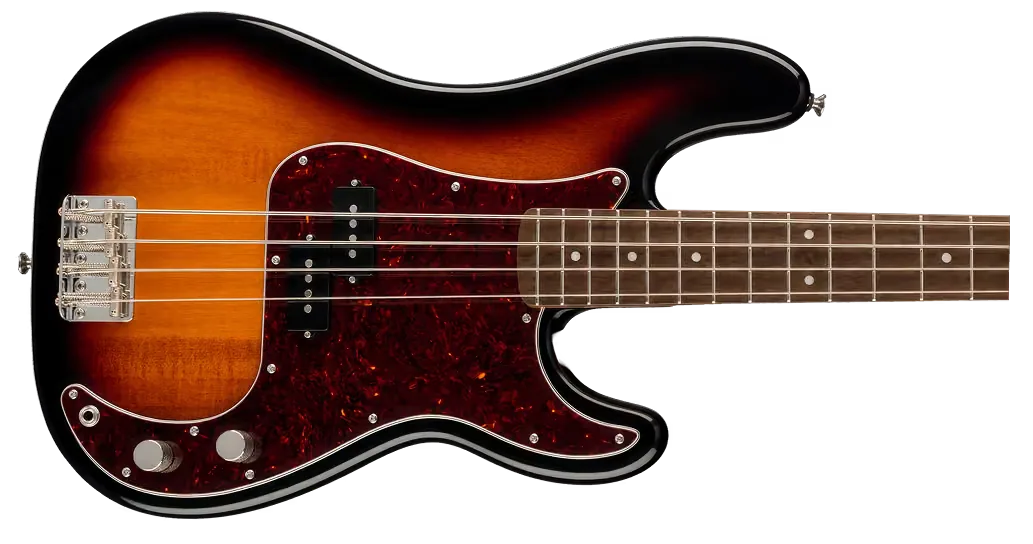
Rest the bass on your right leg with the headstock at about shoulder height. Your fretting wrist stays straight and every fret is in reach.

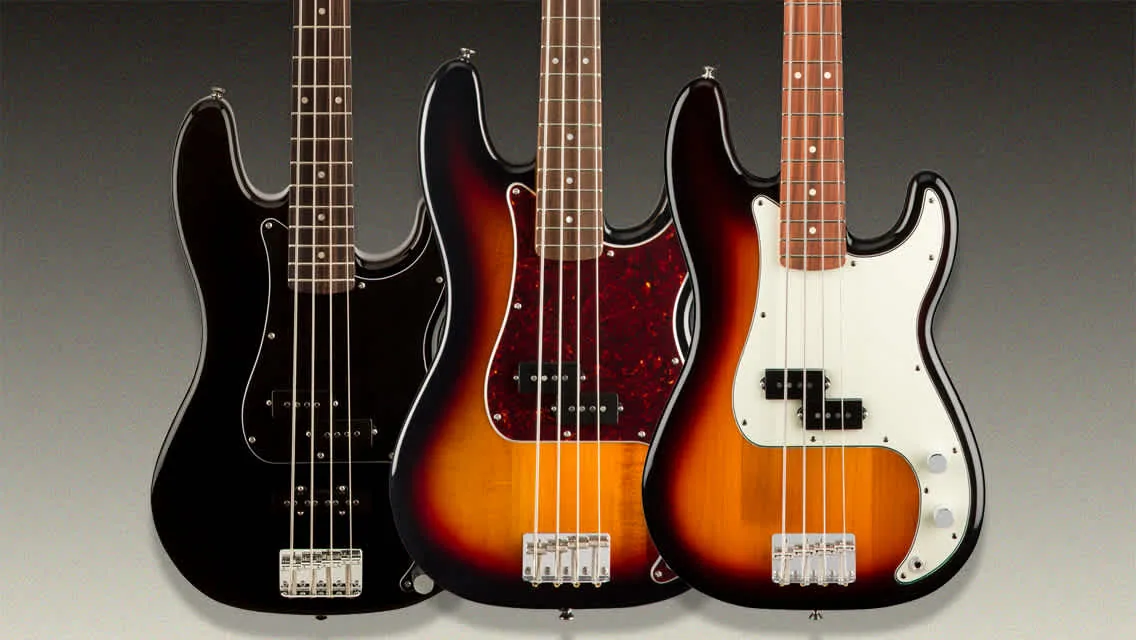
A 4-string, 34-inch scale bass suits most adults; a 30-inch short-scale is easier for small hands. Any of them plays these shapes.
Bass needs an amp to be heard. A practice amp or headphone amp is enough — keep the volume low and the tone flat.
Put the beginner bass chords to work: each chord gets one bar — root, fifth, octave, fifth. Follow the highlighted chord and play the same pattern with it.
I–IV–V–I · G · 96 BPM
Movable shapes only — your hand slides between frets 3 and 5.
I–IV–V–I · A · 100 BPM
The I, IV and V of A, all with open strings.
i–♭III–IV–i · E · 108 BPM
E, G, A — the classic rock-bass move.
I–VI–II–V · C · 92 BPM
Roots that fall by fourths: C, A, D, G. Watch your hand cross strings.
Root and fifth alone sound neither happy nor sad. Once the beginner bass chords feel solid, add the third an octave up and the shape tells you the chord quality — all three start from the same G.
G
G · D · G · B
Root, fifth, octave, then the major third on the G string, 4th fret. Bright and settled.
Gm
G · D · G · B♭
Lower the last note one fret: the minor third, B♭. Darker straight away.
G7
G · D · F · B
Swap the octave for the flat seventh, F, on the D string 3rd fret. The bluesy, unresolved sound.
Ten to fifteen minutes a day is enough. Practise the beginner bass chords with a metronome or the grooves above.
Even notes in time
Slide a shape without looking
Change chords on beat one
Hear major vs minor
Timing and muting matter more on bass than on almost any other instrument.
Play the chord tones one at a time; full chords down low sound muddy.
Rest the plucking thumb on the string below and lift fretting fingers gently to stop notes.
Practise with a metronome and aim to sit exactly on the click, not ahead of it.
Alternate index and middle so fast passages stay even.
Feel the 3rd and 5th fret dots; glance, then trust the shape.
On stage or at home, the same easy bass chords hold the band together.
When the beginner bass chords feel easy, open the full bass chord chart for every chord type, browse the chord library, or generate progressions to groove over.
Every chord, six instruments
Every root and chord type for six instruments, with diagrams and sound.
Open the chord library
Quick answers for new bass players about beginner bass chords, gear and practice.
After the beginner bass chords, the bass chord chart covers 12 roots and seven chord types, with sound.