01Easy
GG major
G1B3D5
No fingers: in open G tuning the five open strings already form a G chord. Strum or roll across all five.
In the keys of C major (V) · G major (I)
These six beginner banjo chords — G, C, D7, Em, Am and F — cover the keys of G and C on a 5-string banjo in open G tuning. G needs no fingers at all, and C and D7 take three. Tap a diagram to hear the chord, or play a progression with a forward roll.
Tap a chord
G · C · D7 · Em — beginner banjo chords behind most bluegrass in G
The diagrams for these beginner banjo chords show all five strings, with the short 5th string on the left. An x on the 5th string means it is not part of the chord — many players still let it ring as a drone. Strum to hear the chord; “one by one” checks each string.
No fingers: in open G tuning the five open strings already form a G chord. Strum or roll across all five.
In the keys of C major (V) · G major (I)
Middle on the 4th string 2nd fret, index on the 2nd string 1st fret, ring on the 1st string 2nd fret. The 5th string rings open.
In the keys of C major (I) · G major (IV)
Index on the 2nd string 1st fret, middle on the 3rd string 2nd fret, pinky on the 1st string 4th fret. Leave the 5th string out at first.
In the keys of G major (V7)
Two fingers on the 2nd fret of the 4th and 1st strings; everything else open. The easiest minor chord on the banjo.
In the keys of C major (iii) · G major (vi)
Index on the 2nd string 1st fret; middle, ring and pinky on the 2nd fret of the 4th, 3rd and 1st strings.
In the keys of C major (vi) · G major (ii)
Index 2nd string 1st fret, middle 3rd string 2nd fret, ring 4th string 3rd fret, pinky 1st string 3rd fret. The hardest of the six — take it slowly.
In the keys of C major (IV) · F major (I)
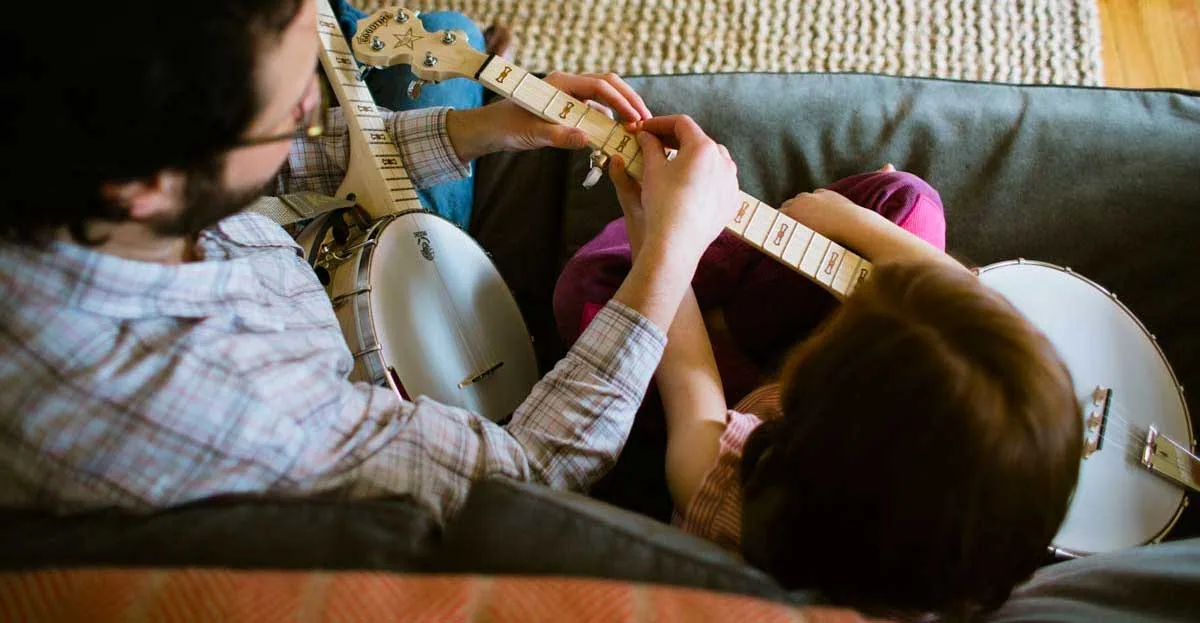
Open G tuning, a comfortable hold and well-fitted picks make the first weeks far easier.
Tune g D G B D, starting with the 4th string. Strum the open strings: if you hear a clean G major, every chord on this page will sound right.
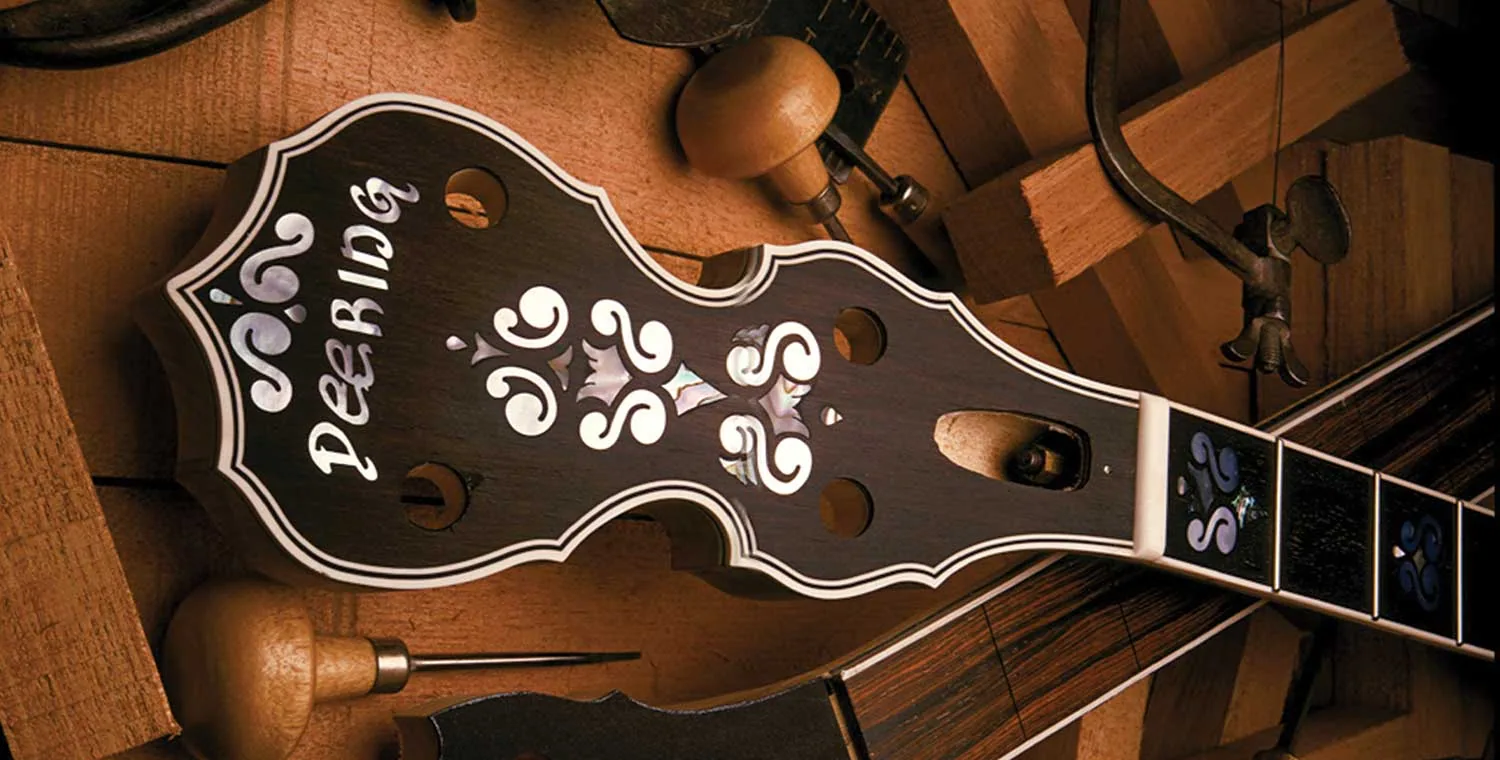
Sit upright with the banjo on your right leg or use a strap so the neck stays at about 45 degrees. Banjos are heavy; let the strap take the weight.

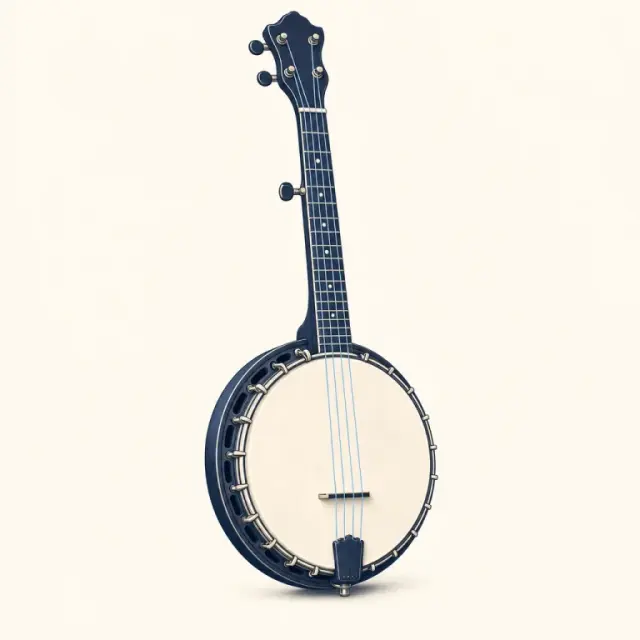
A 5-string resonator banjo suits bluegrass; an open-back is lighter and cheaper for folk and clawhammer. Both use the same beginner chords.
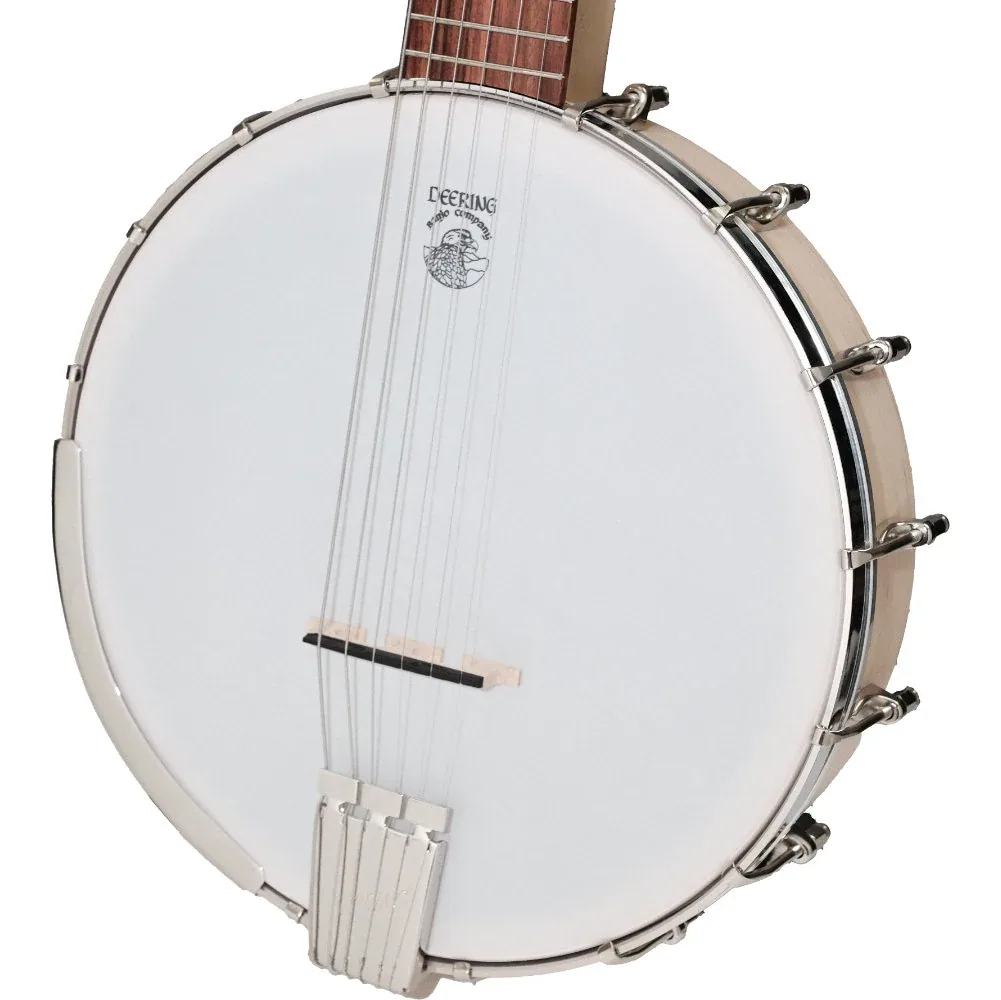
Ten minutes of slow rolls over one chord does more than an hour of fast, uneven picking. Speed comes once the pattern is automatic.
Each progression rolls through the beginner banjo chords with a forward roll — thumb, index, middle — one roll per chord. Follow the highlighted chord and keep your picking hand moving while the fretting hand changes.
I–IV–V7–I · G · 104 BPM
G, C and D7 — the backbone of bluegrass in G.
I–vi–IV–V7 · G · 96 BPM
G, Em, C, D7: a gentle loop for slow songs.
I–vi–IV–V · C · 96 BPM
C, Am, F, G — the same loop as on guitar or uke.
vi–IV–I–V · C · 96 BPM
Start on Am for a darker feel with the same four chords.
Once the six beginner banjo chords feel solid, try this: open G tuning is a major chord, so one finger laid across strings 1–4 makes another major chord. Three frets give you A, C and D.
A
x-2-2-2-2
Lay your index across strings 1–4 at the 2nd fret. Leave out the 5th string (g is not in A).
C
0-5-5-5-5
The same barre at the 5th fret. Here the open 5th string fits the chord and can ring.
D
x-7-7-7-7
Two frets higher. With G (open), C (5) and D (7) you can play a whole song with one finger.
Ten to fifteen minutes a day: half the time on the beginner banjo chords, half on the picking hand.
Clean notes from every string
Change without stopping the roll
Minor chords and the key of C
Play whole songs
Most trouble comes from the picking hand, not the fretting hand.
Play rolls slowly with a metronome — every note the same length and volume.
Keep the picking hand going; change the chord a fraction late rather than stopping.
Keep the thumb of the fretting hand off the 5th string so the drone can ring.
Fit metal picks snugly on the fingertips and the plastic thumb pick firmly.
Place fingertips just behind the fret wire — banjo strings buzz easily otherwise.
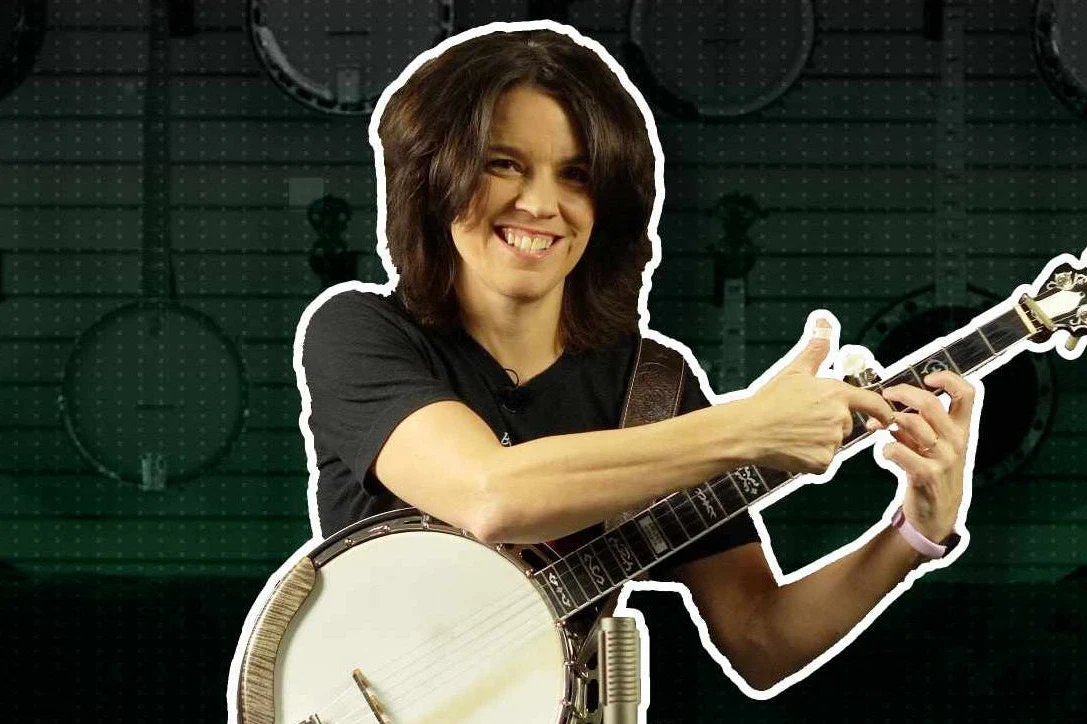
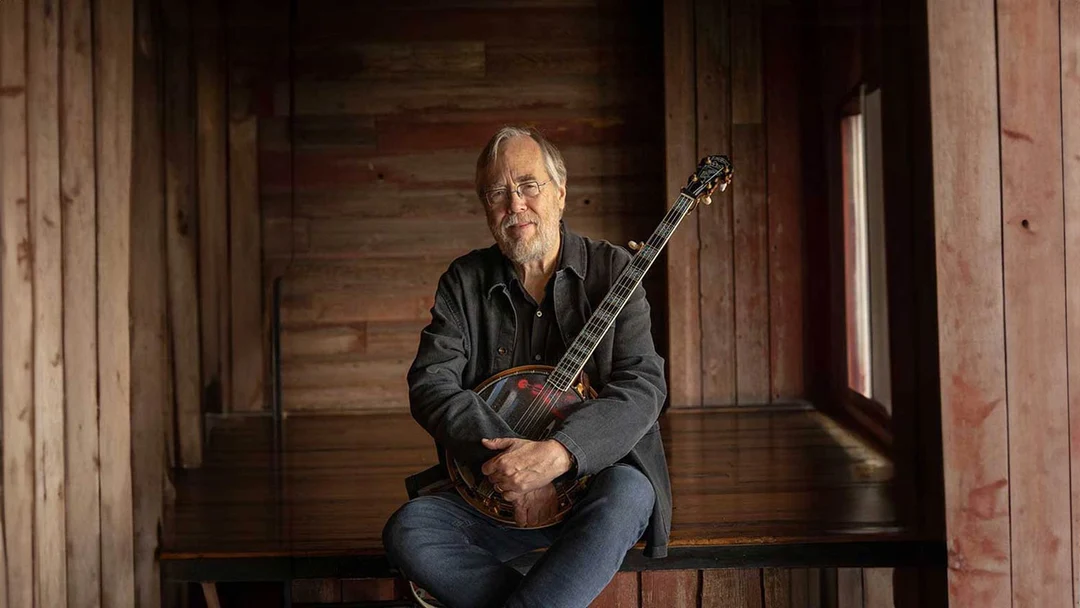
From the porch to the stage, the same six beginner banjo chords start almost every player.
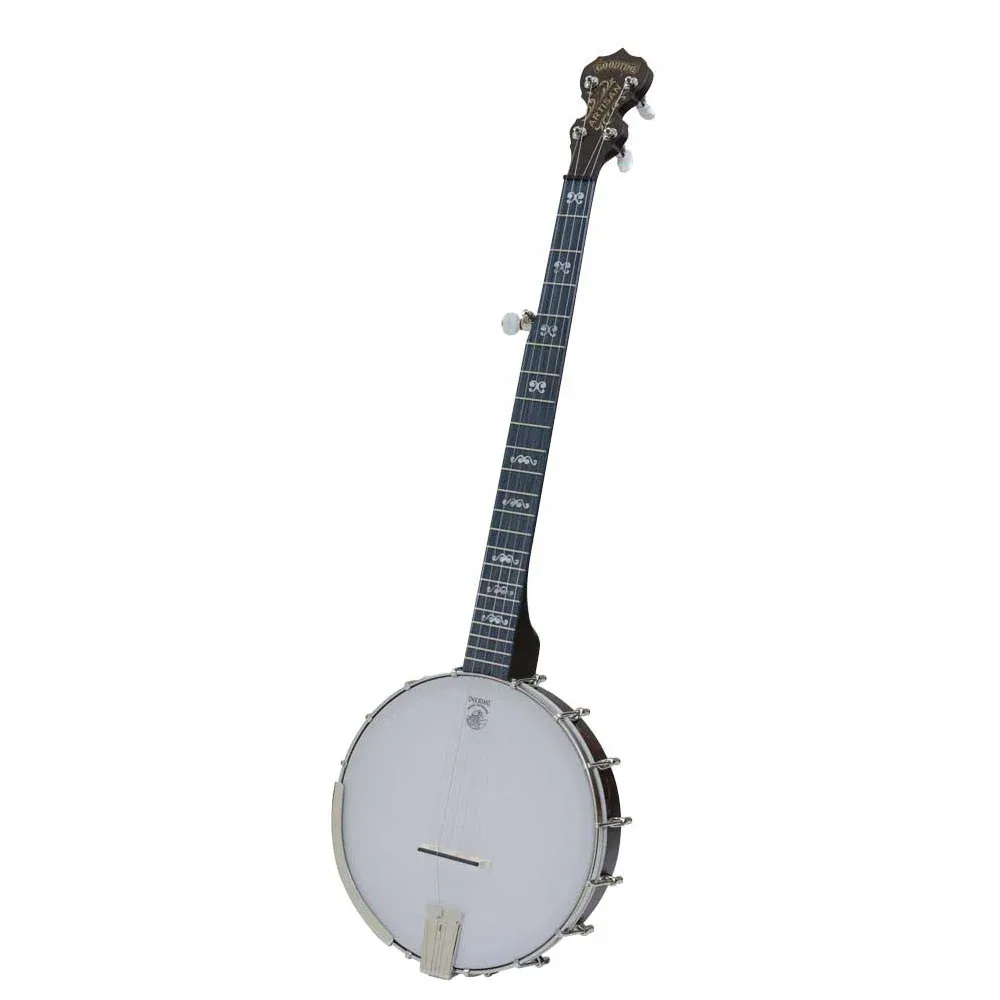


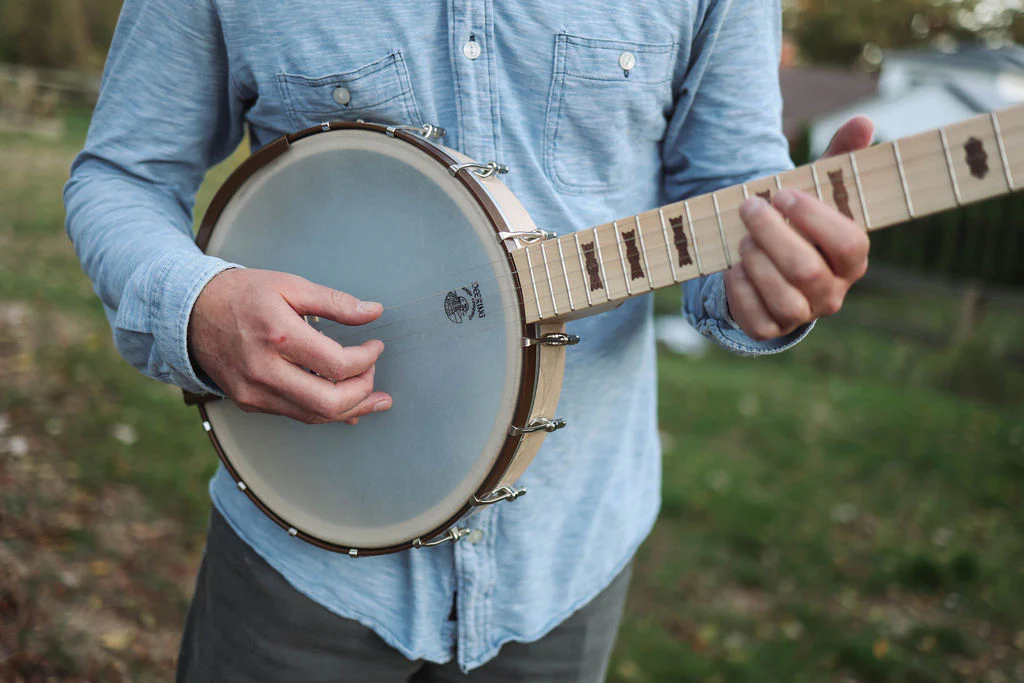
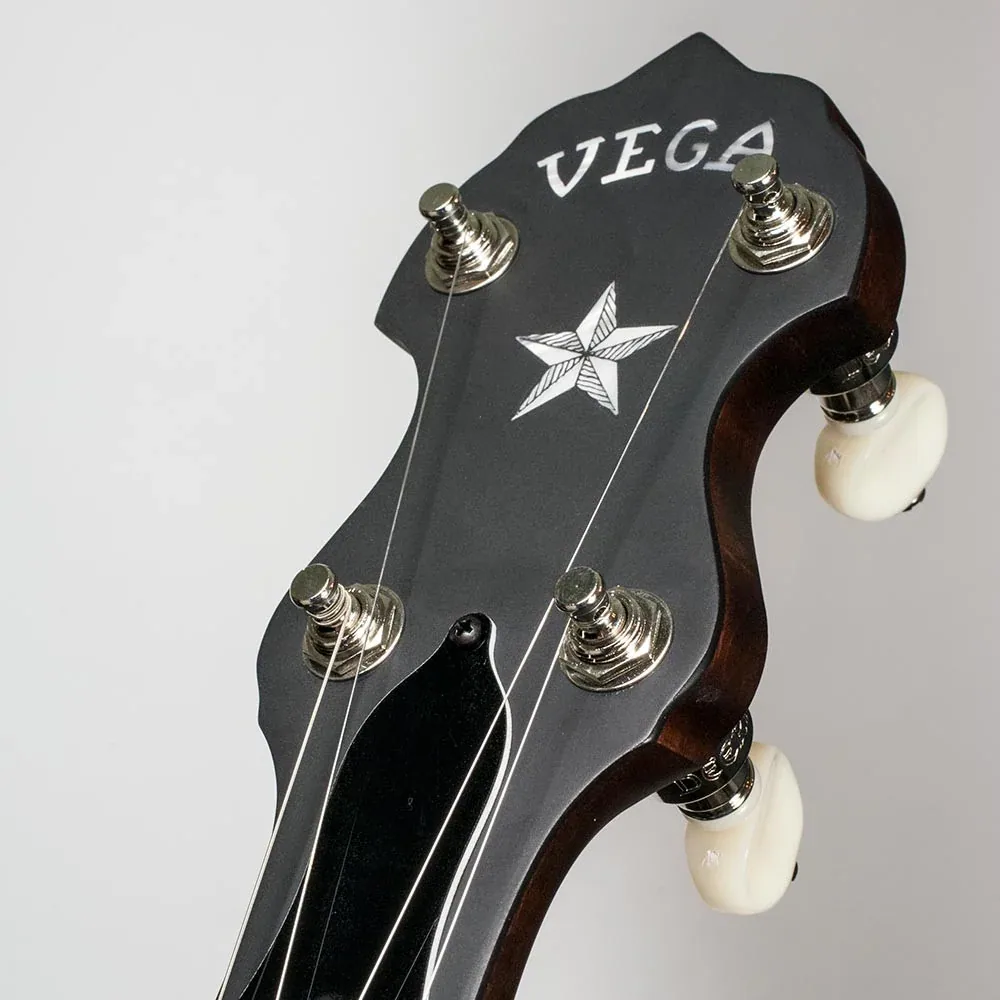
When the beginner banjo chords feel easy, open the banjo chord chart for every key and roll pattern, browse the chord library, or explore other chord progressions.
Every chord, six instruments
Every root and chord type for six instruments, with diagrams and sound.
Open the chord library
Quick answers about beginner banjo chords, picks and practice.
After the beginner banjo chords, the banjo chord chart covers 12 roots, seven chord types and roll patterns, with sound.