
0-0-0-3: C major
One finger on the A string, 3rd fret. The open G, C and E strings already spell a C triad; the fretted note doubles the C.
Load 0-0-0-3Pick a chord and this ukulele chord finder shows every shape on the neck — open, barre and further up the fretboard — with finger numbers and a real strummed sound. Or tap the frets you are holding and it names the shape for you.
C
C major
1 – 3 – 5
The ukulele chord finder has two modes. Find by name lists every useful shape for the chord you choose, easiest first, with the root notes in violet and finger numbers in each dot. Identify by frets lets you build a shape on the fretboard and tells you what it is.
Each diagram can be strummed down, strummed up or picked one string at a time with a real nylon-string sample. Under the shapes, the ukulele chord finder links to the full ukulele, guitar and piano pages.

Found a shape in a song book with no name, or stumbled on a sound you like? Switch the uke chord finder to Identify by frets. Tap a fret on each string — tap the same spot again to lift the finger, or tap the open column to mute a string — and the name appears beside a clean diagram.
Prefer buttons? Use − and + under the fretboard to move each string up or down a fret. The quick buttons in the ukulele chord finder load common shapes such as C, Am, F and G.
Because the ukulele has only four strings, many shapes can be named more than one way: the four open strings G–C–E–A form both C6 and Am7. The ukulele chord finder shows the likeliest name first and the alternatives underneath.
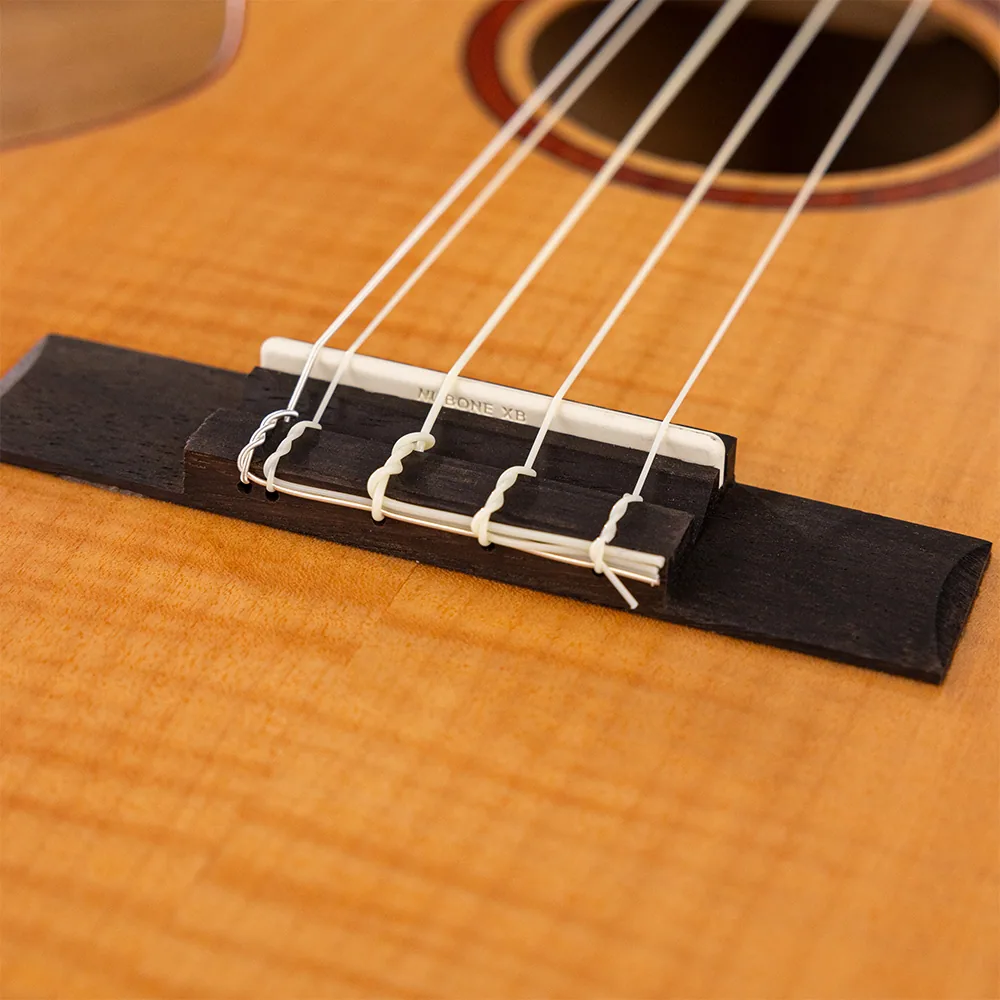
Load these shapes into the ukulele chord finder and strum along. Each one shows something about how uke chords are built and named.
One finger on the A string, 3rd fret. The open G, C and E strings already spell a C triad; the fretted note doubles the C.
Load 0-0-0-3Move to the G string, 2nd fret, and the notes become A–C–E–A. C and Am share three open strings, so the change is easy.
Load 2-0-0-0Keep the Am finger and add the index on the E string: F–A–C. That completes the C–G–Am–F loop behind countless songs.
Load 2-0-1-0The triangle shape, G–D–G–B. Because the G string is tuned high, the lowest pitch is actually the D on the C string.
Load 0-2-3-2All four open strings. The ukulele chord finder reads Am7 first and lists C6 underneath — same notes, two names.
Load the open stringsE is the shape beginners dread. Pick E in Find by name and compare every option the ukulele chord finder offers, each rated easy, medium or hard.
Show E shapesStandard ukulele tuning is G–C–E–A, with a high G string: it is "re-entrant", so the G is higher than the C next to it. That is why the lowest note of a uke chord is often not its root, and why ukulele chords are usually named without a bass note.
Guitarists have a shortcut: the ukulele is tuned like the top four guitar strings with a capo at the 5th fret. A D shape on those four strings is a G on the ukulele, an A shape is a D, and an E shape is an A.
The ukulele chord finder uses standard GCEA tuning (soprano, concert and tenor). Low-G tuning uses the same shapes and names — only the lowest pitch changes. For a baritone uke tuned D–G–B–E, use the top four strings of our guitar chord finder.

These shapes from the ukulele chord finder cover most beginner songs. Learn C, Am, F and G first — together they play the four-chord loop behind countless tunes — then add D, Em, A, Dm and the 7ths. Every name in the table opens its full page; the ukulele chord chart and the beginner ukulele chords guide have the rest.
| Name | Frets (G C E A) | Notes | Difficulty |
|---|---|---|---|
| C | 0 0 0 3 | G C E C | Easy |
| G | 0 2 3 2 | G D G B | Easy |
| Am | 2 0 0 0 | A C E A | Easy |
| F | 2 0 1 0 | A C F A | Easy |
| D | 2 2 2 0 | A D F♯ A | Easy |
| Em | 0 4 3 2 | G E G B | Easy |
| A | 2 1 0 0 | A C♯ E A | Easy |
| Dm | 2 2 1 0 | A D F A | Easy |
| B♭ | 3 2 1 1 | B♭ D F B♭ | Medium |
| E7 | 1 2 0 2 | G♯ D E B | Easy |
| G7 | 0 2 1 2 | G D F B | Easy |
| Bm | 4 2 2 2 | B D F♯ B | Medium |
Any shape without open strings can slide up and down the neck. The B♭ shape (3-2-1-1) becomes B one fret higher and C two frets higher; the Am7 shape slides the same way. The ukulele chord finder labels these "Barre at fret …" or "Fret … shape".
Higher shapes give a brighter sound, a smoother change from the previous one, or a second ukulele part that does not double the first. Try every shape the uke chord finder offers for the same chord and listen to how the colour changes.

Most buzzing or muddy shapes come down to a few habits. The ukulele chord finder lets you hear the clean version first, so you know what to aim for.

Check a shape at the campfire, in class or on stage — the ukulele chord finder works on any phone.


Use them next to the ukulele chord finder: look up other instruments, write progressions and learn the keys.
Tuning, naming, sharing and how to read the diagrams.
See every chord on the ukulele chord chart, or start with the beginner chords.