01
CC major
C1E3G5Right hand: 1-3-5
Thumb on C, middle finger on E, little finger on G. Every white-key triad uses this “play one, skip one” shape.
In the keys of C major (I) · G major (IV)
Seven chords are enough to accompany most simple songs: C, F, G, Am, Dm, Em and G7. All of them use only white keys, so you can learn chord shapes before worrying about sharps and flats. These are the chords piano for beginners lessons start with — tap a keyboard to hear one, then copy the fingering.
Tap a chord
C · F · G · Am — the four chords behind countless songs
Each of the piano chords for beginners is shown around middle C with right-hand finger numbers (1 = thumb, 5 = little finger). Play it together to hear the chord, or one note at a time to check each finger.
Thumb on C, middle finger on E, little finger on G. Every white-key triad uses this “play one, skip one” shape.
In the keys of C major (I) · G major (IV)
Slide the same shape up to F–A–C. Keep the wrist level and let the arm carry the hand.
In the keys of C major (IV) · F major (I)
G–B–D. With C, F and G you have the I, IV and V chords of C major — enough for hundreds of songs.
In the keys of C major (V) · G major (I)
A–C–E. The relative minor of C major: it shares two notes with C, so it sounds related but sadder.
In the keys of C major (vi) · G major (ii)
D–F–A. The ii chord of C major; it leads beautifully into G7.
In the keys of C major (ii) · F major (vi)
E–G–B. The iii chord — less common, but it completes the white-key minor chords.
In the keys of C major (iii) · G major (vi)
G–B–D–F with fingers 1-2-3-5. The F inside the chord pulls strongly back to C.
In the keys of C major (V7)
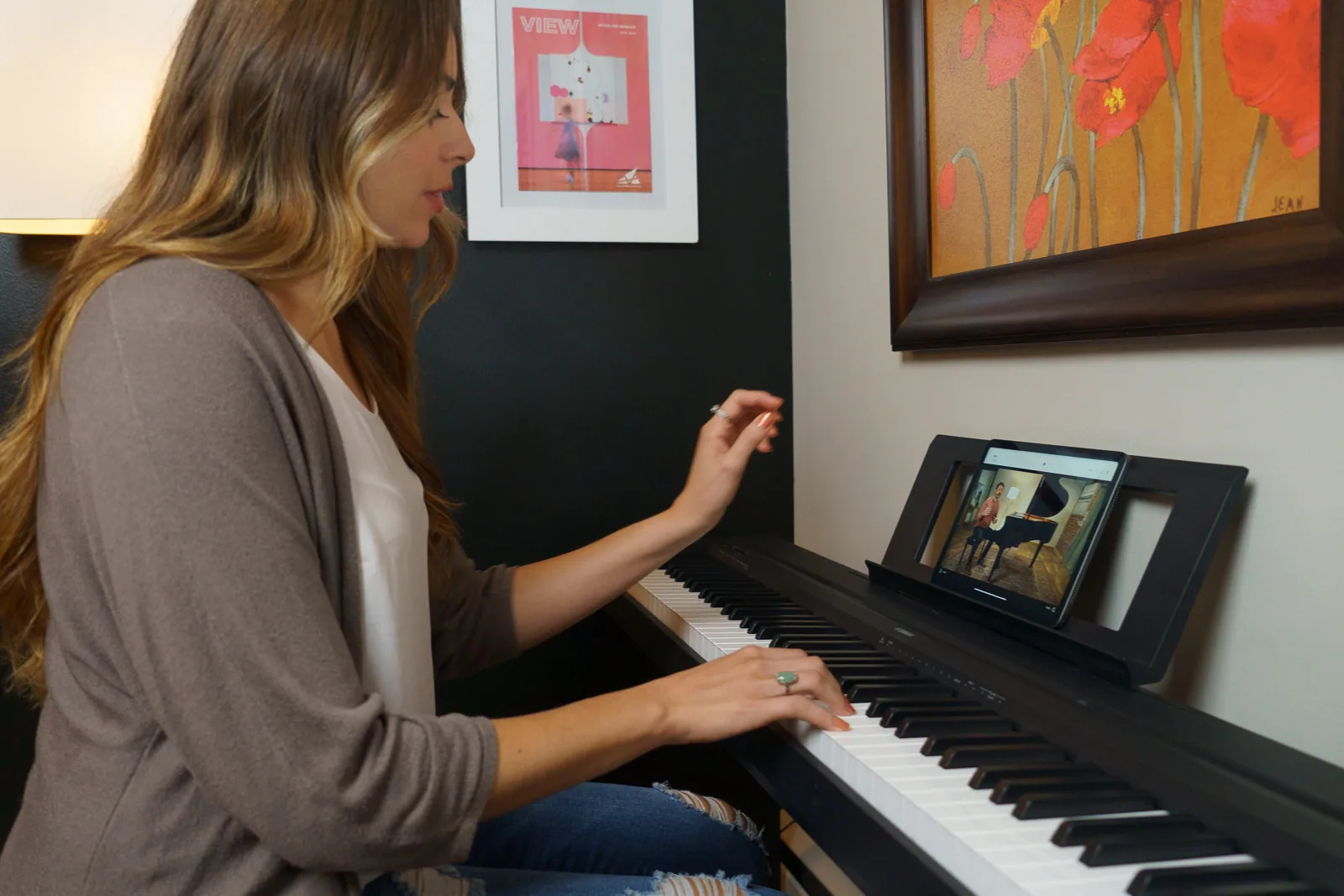
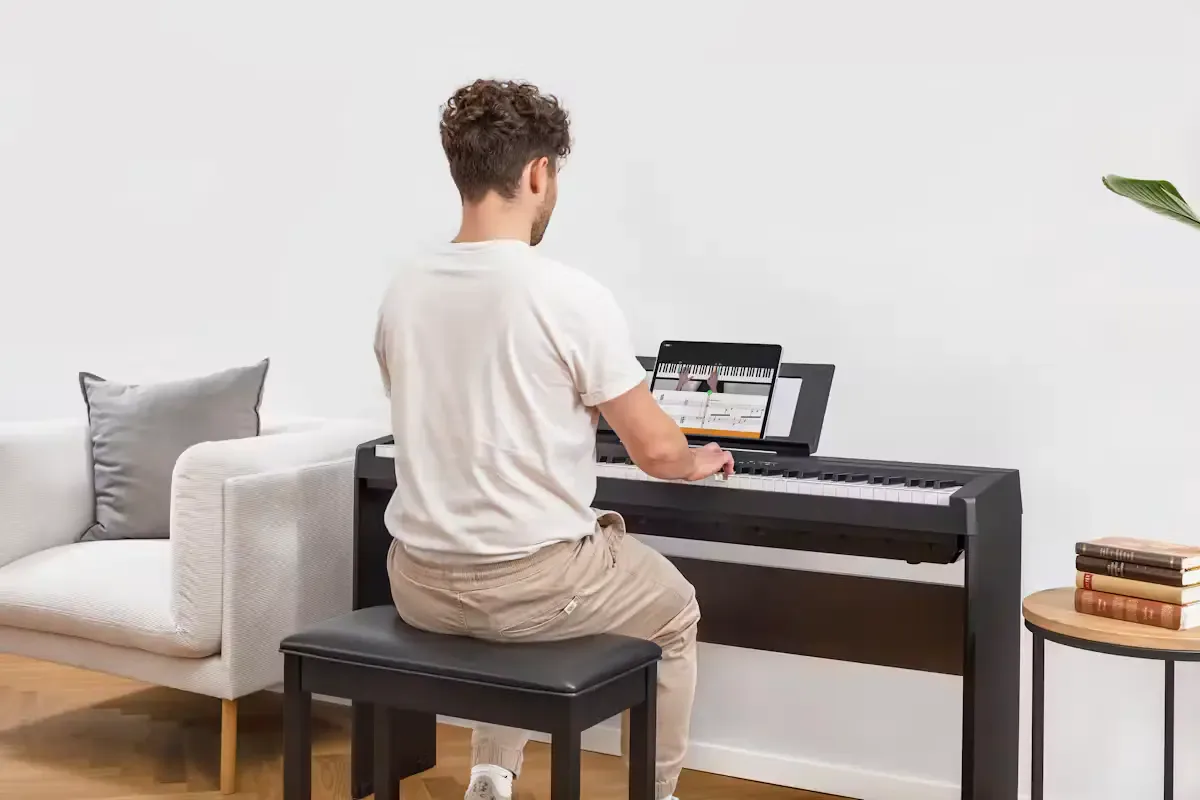
Piano chords for beginners feel easier with good posture and a relaxed hand. Watch how the hands sit, then set up the same way.
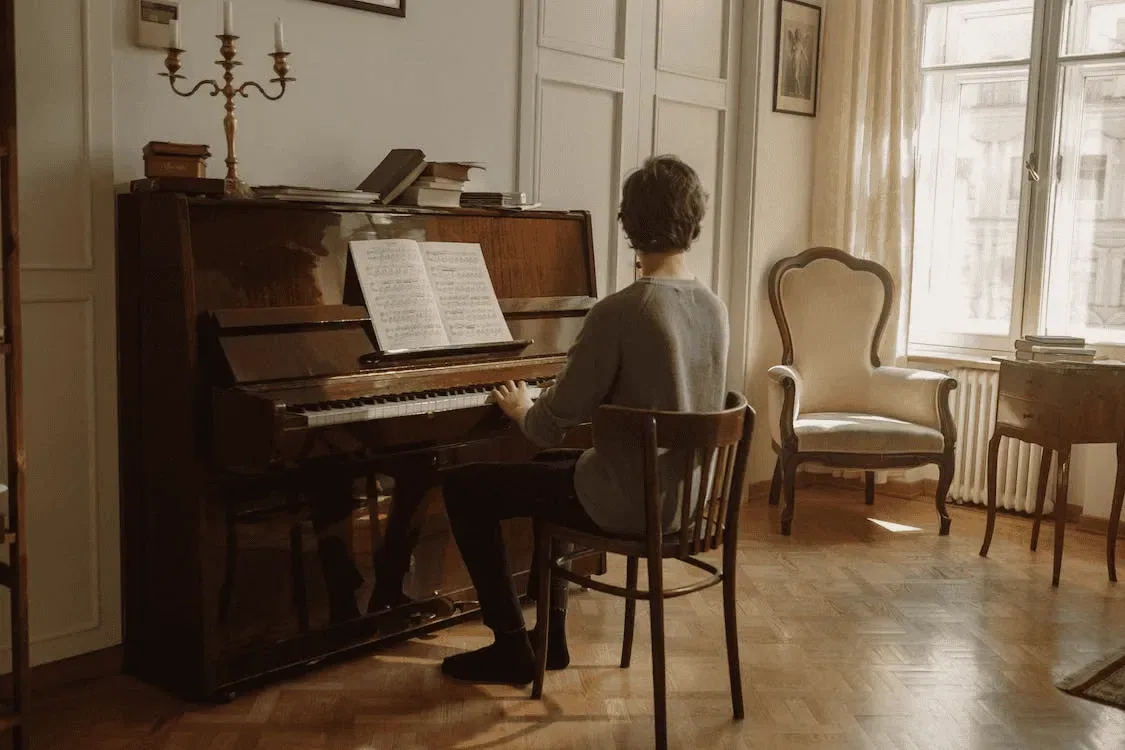
Sit so your forearms are level with the keys and your elbows hang just in front of your body, feet flat on the floor.
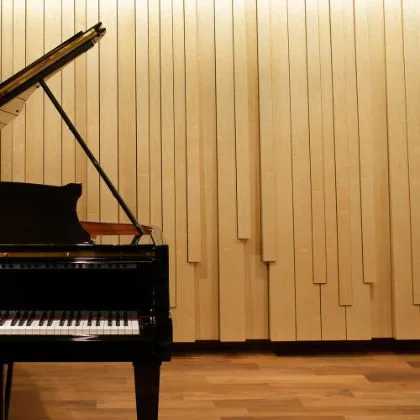
Middle C is the C nearest the centre of the keyboard, just left of a pair of black keys. Every shape on this page starts around it.

A digital piano or a 61-key keyboard with full-size keys is enough to start. Weighted keys feel closer to an acoustic piano.
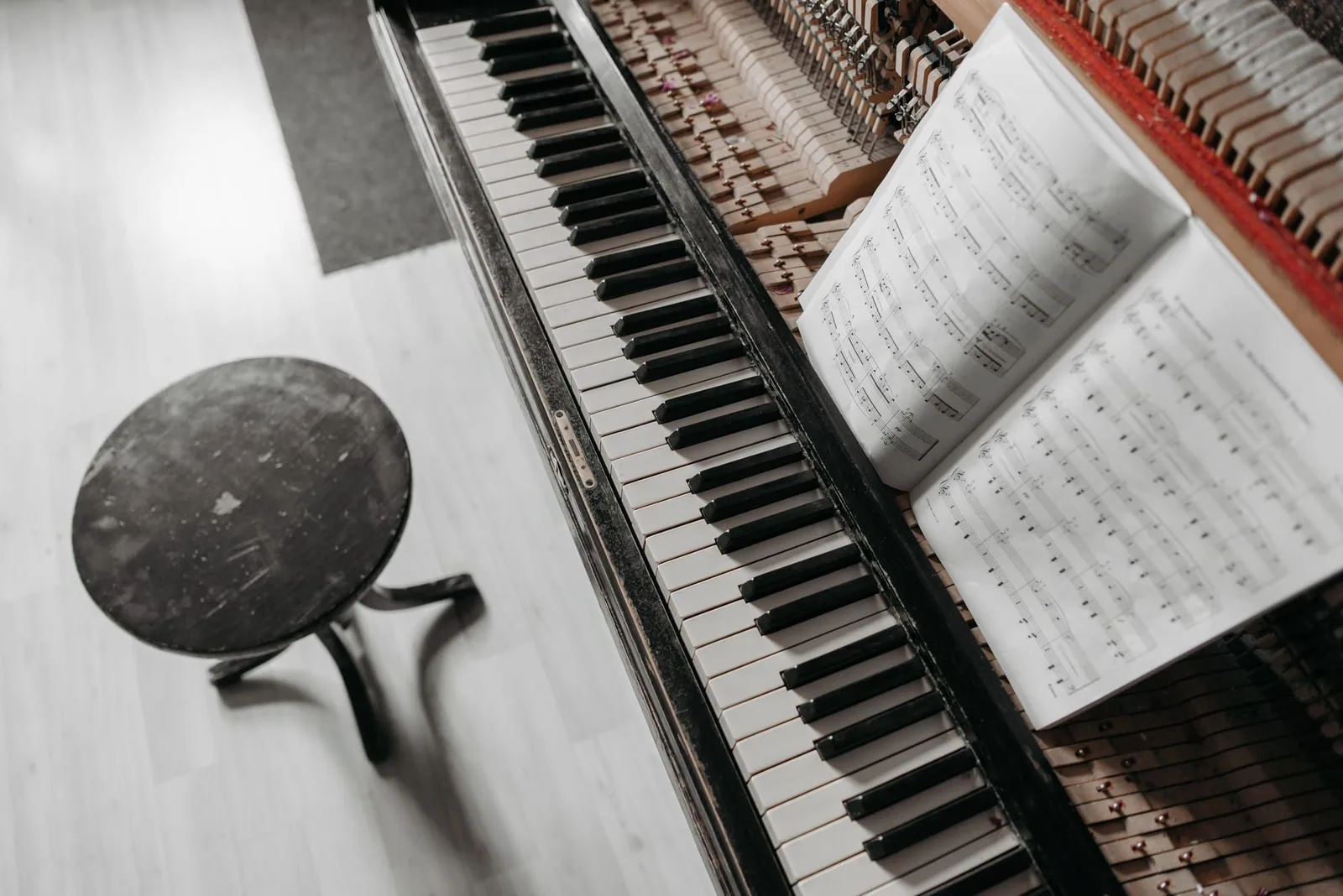
Shape the hand as if holding a ball and play on the fingertips. A soft wrist lets every note of the triad sound evenly.
Press play and follow the highlight — one bar each, using only the seven piano chords for beginners above. The left hand plays the root an octave lower, the right hand plays the triad.
I–IV–V–I · C · 88 BPM
Home, away, further away, home — the shape of countless folk songs.
I–vi–IV–V · C · 84 BPM
The doo-wop loop: try it with the right hand in root position, then with inversions.
vi–IV–I–V · C · 92 BPM
Same four chords as the ’50s loop, started on A minor.
ii–V7–I · C · 80 BPM
The most important move in jazz, and a strong ending in any style.
Inversions are the next step after the first piano chords for beginners: the same notes in a different order, so your hand stays in one spot instead of jumping. Here is C major three ways.
The root is the lowest note. Right-hand fingers 1-3-5. This is how chords are usually written in chord charts.
Move the bottom C up an octave. Right-hand fingers 1-2-5, because the gap is now at the top of the hand.
Move E up as well. Fingers 1-3-5. Try C (root position) → F (C–F–A) → G (B–D–G): your hand hardly moves.
Ten to fifteen minutes a day. Keep the tempo slow and the hand relaxed.
Find each chord without looking for long
Two hands together
Smooth changes with little hand movement
Accompany a melody
Tension and wasted movement cause most problems with keyboard chords.
Curve the fingers as if holding a ball; play on the fingertips with a loose wrist.
Use inversions so chord tones that repeat stay under the same finger.
All notes of a chord should sound together and equally loud — check by playing slowly.
Even one root note in the left hand makes the chord sound full and grounded.
Play only as fast as you can change without stopping. Speed comes from clean, slow repetition.
An acoustic piano, a digital piano or a 61-key keyboard — the chord shapes are the same.



When the piano chords for beginners feel easy, learn the black-key shapes in the full piano chords chart, browse the chord library, or find any chord by tapping its keys.
Every chord, six instruments
Every root and chord type for six instruments, with diagrams and sound.
Open the chord library
Quick answers about piano chords for beginners, fingering and practice.
Once the seven piano chords for beginners feel easy, the full chart covers all 12 roots with notes, inversions and sound.