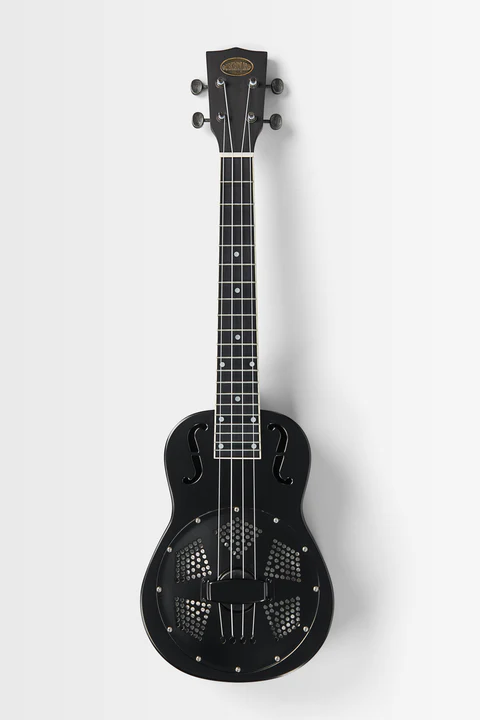
Ukulele · Dominant 7th chord
ukulele chord

E Flat Dominant 7th Chord (E♭7) on Ukulele

Notes
E♭ · G · B♭ · D♭
Intervals
P1 · M3 · P5 · m7
Formula
1–3–5–♭7
Also written
E♭dom7 · D♯7
Easiest
0334
Shapes
7
E♭7 ukulele chord diagram, Open position (0334)123GE♭GD♭GCEA
Start here · Standard shapeEasy

Open position0334

The E♭7 ukulele chord spells E♭–G–B♭–D♭: four notes, 1–3–5–♭7. Start with the open 0334 shape: three fingers, nothing to barre, and quick to switch to and from. You will meet it most often in A♭ major (V7) and F minor (VII7).

Violet dots are the root. Numbers are fingers (1 index … 4 pinky); × = don’t play, ○ = open string.

Step by step

How to play the E♭ dominant 7th chord on ukulele, step by step

These steps follow the standard 0334 shape of the E♭7 ukulele chord, one finger at a time.

  1. 1Put your index finger on the C string, fret 3 — that note is E♭.
  2. 2Put your middle finger on the E string, fret 3 — that note is G.
  3. 3Put your ring finger on the A string, fret 4 — that note is D♭.
  4. 4Let the G string ring open (G). Arch your fingers so they don’t touch it.
  5. 5Strum from the G string down. You should hear 4 notes: G E♭ G D♭. If one sounds dull, pick the strings one by one to find the finger that is touching it.
Every shape

More ways to play the E♭7 ukulele chord

7 ukulele shapes, most useful first. Tap any card to hear it.

1 / 7Standard shapeEasy

Open position

E♭7 ukulele chord diagram, Open position (0334)123GE♭GD♭GCEA

3 fingers, 1 open string.

Frets0334
2 / 7Medium

Barre at fret 6

E♭7 ukulele chord diagram, Barre at fret 6 (6766)6fr121D♭GB♭E♭GCEA

2 fingers, one barre.

Frets6766
3 / 7Medium

Fret 3 shape

E♭7 ukulele chord diagram, Fret 3 shape (0364)3fr142GE♭B♭D♭GCEA

3 fingers, 1 open string.

Frets0364
4 / 7Medium

Fret 8 shape

E♭7 ukulele chord diagram, Fret 8 shape (8-10-9-10)8fr1324E♭B♭D♭GGCEA

4 fingers.

Frets8-10-9-10
5 / 7Medium

Fret 7 shape

E♭7 ukulele chord diagram, Fret 7 shape (8-7-9-10)7fr2134E♭GD♭GGCEA

4 fingers.

Frets8-7-9-10
6 / 7Medium

Fret 11 shape

E♭7 ukulele chord diagram, Fret 11 shape (12-13-11-13)11fr2314GD♭E♭B♭GCEA

4 fingers.

Frets12-13-11-13
7 / 7Medium

Barre at fret 3

E♭7 ukulele chord diagram, Barre at fret 3 (3334)112B♭E♭GD♭GCEA

2 fingers, one barre.

Frets3334
Chord changes

How to switch to the E♭7 ukulele chord

Getting to a chord in time matters more than holding it. Here is how your fingers travel on the ukulele neck from B♭7 and B♭m7 into the E♭7 ukulele chord.

B♭7→E♭7

Shared · B♭
B♭7 chord shape (1211)121E♭7 ukulele chord diagram (0334)123

B♭7 and E♭7 share B♭. No finger stays in place, so move all three fingers together as one shape. Release the barre on the way — this E♭7 shape needs none.

B♭m7→E♭7

Shared · B♭ D♭
B♭m7 chord shape (1111)11E♭7 ukulele chord diagram (0334)123

B♭m7 and E♭7 share B♭ and D♭. No finger stays in place, so move all three fingers together as one shape. Release the barre on the way — this E♭7 shape needs none.

Theory

What makes it a E♭ dominant 7th chord

E♭7 is stacked from the root up: E♭→G is a major 3rd (4 half steps), G→B♭ is a minor 3rd (3 half steps), B♭→D♭ is a minor 3rd (3 half steps). Together they make the 1–3–5–♭7 recipe shared by every dominant 7th chord.

The added flat seventh creates tension that wants to resolve — the sound of blues, funk and every V–I cadence. E♭7 is E♭ major plus D♭, the flat seventh; the tritone between G and D♭ is what pulls it toward A♭.

E♭7 and D♯7 are the same sound and the same shape — enharmonic spellings. Sharp keys write D♯7; flat keys write E♭7. We use the more common E♭7.

1–3–5–♭7
  • root
  • major 3rd
  • perfect 5th
  • minor 7th
E♭7: E♭ G B♭ D♭C4GC5E♭B♭D♭
Keys

E♭7 in different keys

E♭7 belongs to 2 of the 24 major and minor keys. In A♭ major it is the dominant (V7) that pulls back to the tonic. Tap a key to see its scale on the piano.

KeyNumeralRole in the keyScale
A♭ majorV7dominantSee the scale
F minorVII7subtonicSee the scale
Progressions

Progressions with the E♭7 ukulele chord

The E♭7 ukulele chord sticks once you hear it in context. Tap a tile to hear it alone, or play the whole loop on ukulele.

12-bar blues

E♭ major · 96 BPM

Twelve bars of dominant 7th chords on I, IV and V — the form behind blues, early rock and roll and jam sessions.

Jazz ii–V–I

A♭ major · 120 BPM

The fundamental cadence of jazz harmony: minor 7th, dominant 7th, then a resolution to major 7th.

Royal road

A♭ major · 92 BPM

The J-pop staple that climbs from IV to V and then falls to the minor chords — hopeful yet bittersweet.

Practice

A five-minute practice routine for the E♭7 ukulele chord

Five minutes a day beats an hour once a week. Run these four drills in order and the E♭7 ukulele chord will soon land cleanly on the first try.

  1. 1

    Ring test1 min

    Hold the 0334 shape and pick one string at a time. The open G string has to ring clearly — if not, arch the finger next to it.

  2. 2

    Lift and land1 min

    Fret E♭7, strum once, lift your hand an inch off the strings and land the shape again — ten times in a row. Aim for all three fingers to touch down together.

  3. 3

    B♭7 ↔ E♭7 changes2 min

    Alternate B♭7 and E♭7: four strums each, then two, then one. No finger stays in place, so move all three fingers together as one shape.

  4. 4

    Play it in a loop1 min

    Play the 12-bar blues loop above (E♭7–E♭7–E♭7–E♭7–A♭7–A♭7–E♭7–E♭7–B♭7–A♭7–E♭7–B♭7) at 96 BPM; once it feels easy, add 10 BPM.

Ukulele player strumming — E♭7 ukulele chord practice
Troubleshooting

Common E♭7 ukulele chord mistakes

If your E♭7 ukulele chord doesn't sound right, check these first — each one is based on the standard 0334 shape.

Mistake 1

Mixing up E♭7 and E♭maj7

E♭7 uses D♭, the flat 7th, on the A string, fret 4. One fret higher gives E♭maj7, which sounds dreamy instead of bluesy.

Mistake 2

Expecting a low bass note

The G string is tuned high, so the lowest note of E♭7 on ukulele is E♭ on the C string — the root, as it happens. That is normal: strum all four strings.

Mistake 3

Muting the open string

The open G string has to ring. Come down on your fingertips with the knuckles arched, so the finger next to it doesn't brush it.

Ukulele
Ukulele player strumming — practising the E♭ dominant 7th chord
Ukulele
Ukulele
FAQ

E♭7 ukulele chord FAQ

Notes, difficulty, substitutes, keys and genres for E♭7, answered.

What notes are in the E♭7 ukulele chord?

E♭7 has four notes: E♭, G, B♭ and D♭ — the root, major 3rd, perfect 5th and minor 7th (1–3–5–♭7). The standard E♭7 ukulele chord shape, 0334, plays G E♭ G D♭ from low to high, repeating some notes in other octaves.

Is the E♭7 ukulele chord hard to play? What is the easiest way?

Not at all. The standard 0334 shape uses three fingers and no barre, so it is a beginner-friendly chord.

How long does it take to learn the E♭7 ukulele chord?

At five minutes a day, the standard 0334 shape usually rings clean within a few days. Changing to it in time takes longer than fretting it, so practise the switches every day.

What is a 7th chord, and how is E♭7 different from E♭maj7?

E♭maj7 swaps D♭ for D: E♭7 is E♭ G B♭ D♭, E♭maj7 is E♭ G B♭ D. E♭maj7: The major seventh sits just a half step below the root, and that soft rub gives the dreamy, jazzy colour.

E♭7 vs E♭ major: what is the difference?

E♭ major drops D♭: E♭7 is E♭ G B♭ D♭, E♭ major is E♭ G B♭. E♭7: The added flat seventh creates tension that wants to resolve — the sound of blues, funk and every V–I cadence.

Which genres use the E♭ dominant 7th chord?

The E♭ dominant 7th chord shows up across styles: jazz, gospel and classical cadences — the V7 in A♭ major (B♭m7–E♭7–A♭maj7); rock and funk — the VII7 in F minor (Fm7–E♭7–D♭maj7); the blues — the I7 of a 12-bar blues in E♭ (E♭7–A♭7–B♭7).

How do you play E♭7 on guitar and piano?

On guitar the standard shape is x68686; on piano it is E♭ G B♭ D♭ with right-hand fingers 1-2-3-5. Same notes, different order.

Is there a left-handed E♭7 ukulele chord diagram?

Yes. Switch on "Left-handed" next to the main diagram and every E♭7 shape on this page flips into a mirror image — the G string moves to the right, while the fingers and the sound stay the same.

Every ukulele chord, ready to hear.

After the E♭7 ukulele chord, open the next one: 12 roots × 7 types, each with diagrams and sound.